


If you want to find the best way to straighten your hair, you have probably heard of Brazilian keratin treatments and Japanese hair straightening. Both are popular salon services for people who want smoother, more manageable hair and longer-lasting results than everyday heat styling.
Although these treatments have some things in common, their methods and results are quite different. Each has its own benefits, and the best choice depends on your hair type, its condition and your styling goals.
Japanese Hair Straightening Method
Japanese hair straightening, also known as thermal reconditioning, uses a chemical straightening solution together with carefully controlled heat. It can transform naturally wavy, curly or frizzy hair into a very straight finish.
The procedure is somewhat similar to chemical relaxing. First, a stylist applies the straightening formula to change the hair's internal bonds. After the required processing time, the product is rinsed out, the hair is dried and a flat iron is used on small sections.
A neutralizer is then applied to help set the hair in its new, straight shape. Because this process changes the hair's structure, the treated lengths generally remain straight as the hair grows out. New growth will retain its natural texture, so root touch-ups may be necessary.
Japanese straightening can provide dramatic results, but it may also weaken hair, particularly if the hair is already bleached, fragile or heavily processed. A professional consultation and strand test are important before treatment. Excessive heat or overlapping chemical services can increase the risk of breakage.
Unlike some Brazilian smoothing formulas, Japanese straightening does not normally rely on formaldehyde to change hair bonds. However, that does not make every formula or application risk-free: the specific ingredients, hair condition and technique all matter.
Brazilian Keratin Treatment Method

Many people with wavy or curly hair prefer Brazilian keratin smoothing because it can reduce frizz, improve shine and make daily styling easier while preserving more natural movement than permanent straightening.
Brazilian keratin treatments usually involve applying a smoothing formula, blow-drying the hair and sealing the treatment with a flat iron. The precise procedure depends on the product and should always follow its official directions.
Unlike Japanese thermal reconditioning, Brazilian keratin smoothing generally does not permanently restructure the hair in the same way. Results gradually fade, often over approximately 8–12 weeks, although the effect varies according to the formula, hair type and aftercare.
People with color-treated or previously processed hair may be candidates for certain Brazilian smoothing treatments, but a stylist should first assess hair strength and elasticity. Some smoothing products can release irritating vapors when heated, so ingredients, ventilation and temperature control are important. A relaxer is not a required preparation step.
Explore Nutree Professional Keratin Treatments
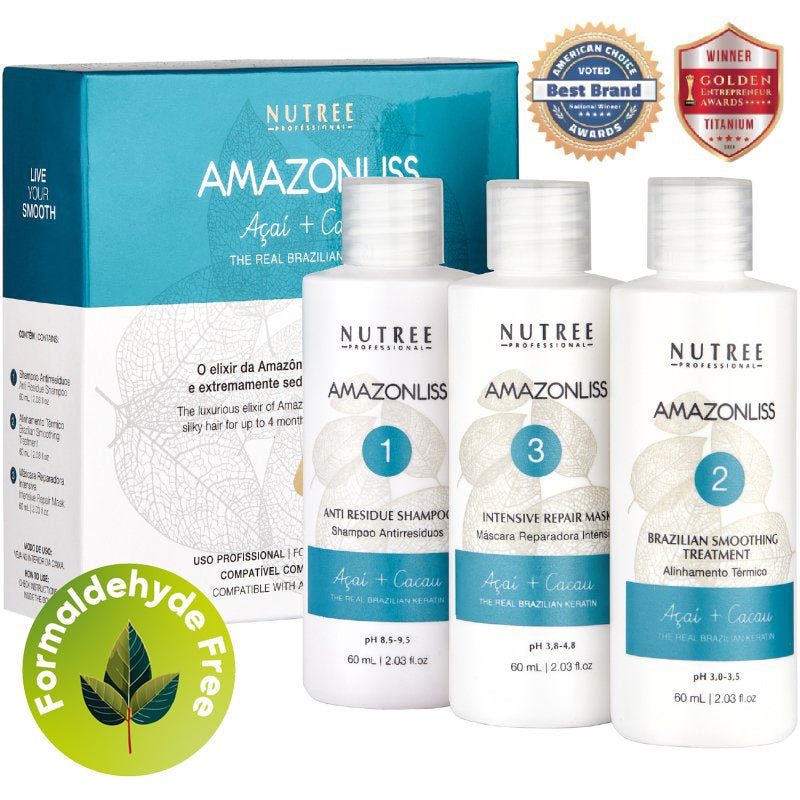
For people who prefer a Brazilian smoothing approach, Nutree Professional offers Amazonliss treatments in different formats. Choose a complete starter set or a separate smoothing treatment, depending on your experience and needs.

Japanese vs. Brazilian Straightening: Which Is Better?
If your goal is a very straight, long-lasting change in hair texture, Japanese straightening may be the closer match. If you want to control frizz, add shine and simplify styling while keeping a softer, more flexible finish, Brazilian keratin smoothing may be preferable.
Whichever method you choose, your hair's condition should come first. Discuss past coloring, bleaching and chemical services with a qualified stylist, request a strand test when appropriate and follow the product's safety and aftercare instructions.
For Brazilian smoothing, gentle aftercare and avoiding unnecessary heat can help maintain a polished look between treatments.


